Selecting the Right Introductory Sudoku Resource for Young Learners
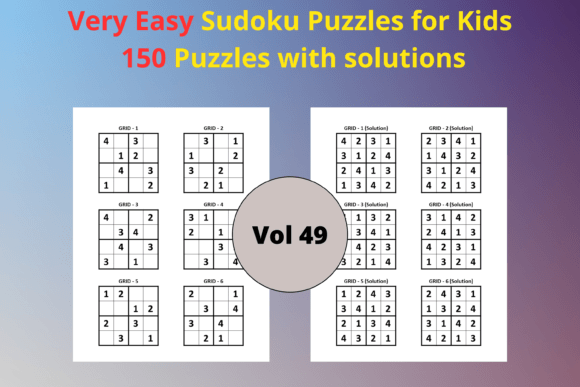
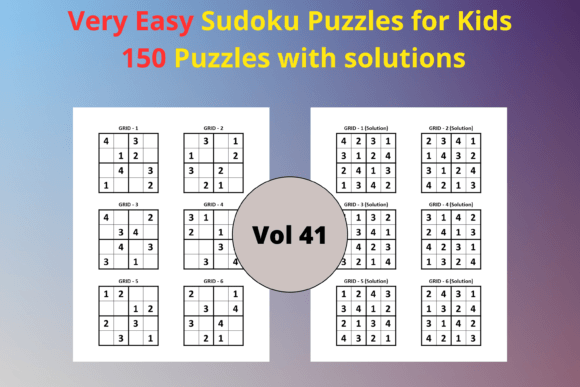
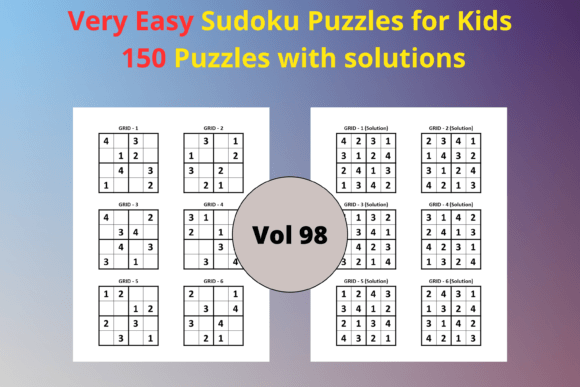
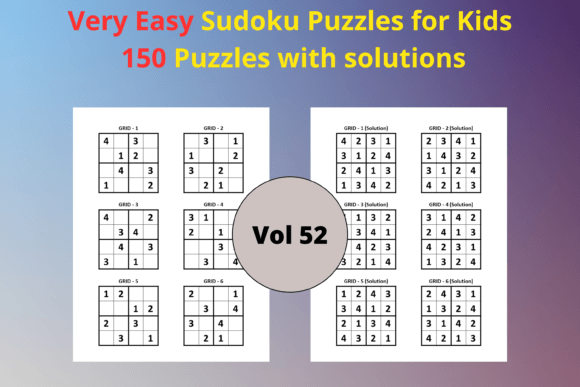
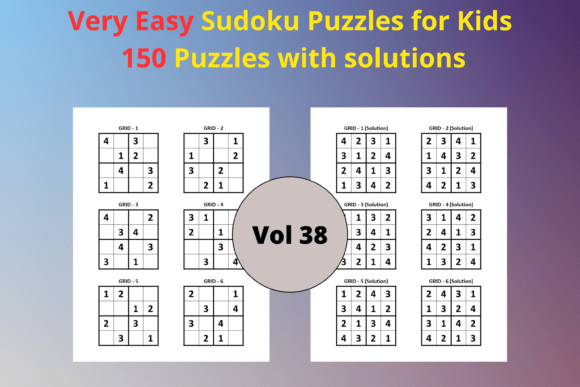
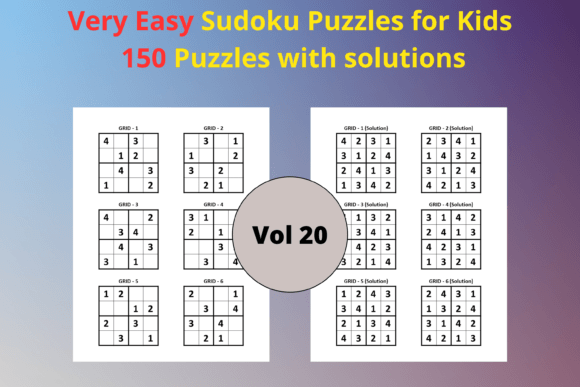
When introducing children to logic and puzzle games, the initial experience is critical. A resource that is too challenging can frustrate and discourage, while one that is insufficiently engaging fails to develop the foundational skills. In this context, digital puzzle packs designed for educators and parents, such as Very Easy Sudoku for Kids 20, represent a specific category of tool. This product is a curated collection of 150 distinct 4x4 Sudoku puzzles, each paired with a solution, packaged as a ready-to-use digital download. Understanding its structure, potential applications, and how it compares to broader alternatives is key to determining if it aligns with your specific needs.
Core Structure and Distinguishing Features
Very Easy Sudoku for Kids 20 is defined by several concrete parameters. It exclusively features the 4x4 grid format, which reduces the number of cells and possible combinations compared to standard 9x9 puzzles. The “Very Easy” designation indicates a logical difficulty calibrated for absolute beginners, often using a higher number of pre-filled cells to guide the solver. The offering is quantitatively substantial: 150 unique puzzles with 150 corresponding solutions provide a large volume of material.
From a practical delivery standpoint, it is provided as a KDP (Kindle Direct Publishing) Interior, meaning it is formatted for print-on-demand or digital use. The inclusion of both a PDF ready for upload and an editable PPTX file is a significant functional distinction. The PDF offers immediacy and reliability, while the PPTX allows for customization—a teacher might want to extract a single puzzle for a worksheet or adjust formatting for a specific classroom need. The 8.5 x 11 inch page size is the standard for US letter paper, ensuring hassle-free physical printing.
Comparison with General Sudoku Resources for Children
When evaluating Very Easy Sudoku for Kids 20, it's useful to contrast it with other common avenues for obtaining children's Sudoku puzzles. Free websites and mobile apps often provide a wide range of difficulties and grid sizes, sometimes dynamically generating puzzles. These can offer variety and interactive feedback, but their puzzles may not be curated for a consistent “very easy” experience, and they lack the structured, bulk collection designed for systematic use or physical printing.
Physical puzzle books purchased from retailers are a direct alternative. These provide a tangible product but are fixed in their content and sequence. A book might contain 100 puzzles across mixed difficulties, whereas Very Easy Sudoku for Kids 20 guarantees a focused, large set at one specific entry level. The digital and editable nature of the pack also provides flexibility that a static book cannot.
Evaluating Fit: Strengths and Ideal Use Cases
The primary strength of this resource is its specialization and volume. For a parent or educator aiming to build a child's confidence with a single, manageable puzzle type, having 150 variations of that exact format eliminates the need to search or filter through harder puzzles. This consistency is pedagogically valuable. The dual file format (PDF/PPTX) is another clear strength, catering to both those who need a ready-to-go solution and those who require adaptability.
The product seems optimally fit for specific scenarios. A teacher planning a sustained unit on logical reasoning might use the pack as a daily warm-up activity, leveraging the editable file to integrate puzzles into lesson packets. A parent seeking a structured, screen-free activity for a young child during travel or quiet time could print a sequence of puzzles from the PDF. Homeschooling environments, where customizable resources are highly prized, could particularly benefit from the PPTX component.
Tradeoffs and Potential Limitations
Choosing a specialized product like Very Easy Sudoku for Kids 20 involves inherent tradeoffs. The exclusive focus on 4x4 grids means it does not serve the need for progression to 6x6 or 9x9 puzzles. Once a child masters the 4x4 logic, this pack alone cannot provide the next challenge. Users must seek another resource for that development.
The “Very Easy” level, while perfect for initiation, might become repetitive for a child who grasps the concept quickly. The 150 puzzles maintain the same fundamental difficulty. Furthermore, the product is purely a puzzle collection; it does not include instructional guides, teaching notes, or progressive tutorials on Sudoku strategy. Its value is in the puzzles themselves, not in pedagogical support material.
Decision Factors for Selecting a Puzzle Pack
When deciding if this is the right resource, consider the following factors. First, assess the specific need for consistency and volume. Do you require a large number of identical-format puzzles to ensure repetitive practice without difficulty spikes? If yes, this pack excels. If you prefer a mix of difficulties to test a child's adaptability, a mixed-difficulty book or app may be better.
Second, evaluate the importance of customization and delivery format. The ability to edit and extract puzzles via PowerPoint is unique compared to static PDFs or books. If you need to incorporate puzzles into other documents or tailor layouts, the PPTX file is a significant advantage. If you simply want to print a whole book as-is, a standard PDF or physical book suffices.
Finally, consider the long-term learning path. Very Easy Sudoku for Kids 20 is an excellent foundational tool. It is likely the right choice if your immediate goal is building confidence and fluency with the simplest grid. However, it should be viewed as a potential first step in a broader puzzle curriculum. Its utility diminishes if used as a standalone, long-term resource without planning for subsequent, more challenging materials.
When Another Option Might Be More Suitable
There are clear situations where alternatives to Very Easy Sudoku for Kids 20 merit consideration. If the child in question is not an absolute beginner but has some experience with simple puzzles, a pack that includes a gradient of difficulties (e.g., from Very Easy to Easy) would prevent stagnation. Similarly, if the goal is not just practice but also learning strategy, a resource that combines puzzles with step-by-step instructional content would be more comprehensive.
For users who prioritize portability and interactive features, a well-designed mobile app might offer a better experience. Apps can provide immediate feedback, track progress, and often adjust difficulty dynamically. The tradeoff is the lack of printable, physical copies and the potential for screen-time. Conversely, if the desire is for a single, elegant physical object, a high-quality printed book from a bookstore might satisfy that preference more than a digital file requiring self-printing.
Conclusion: A Targeted Tool for a Specific Phase
Very Easy Sudoku for Kids 20 is a focused, utilitarian product. It does not attempt to be a universal Sudoku solution for children, but rather a dense collection tailored to the very first stage of learning. Its value lies in its elimination of guesswork for the provider—every puzzle is guaranteed to be at the appropriate introductory level. The inclusion of an editable file format adds a layer of utility for professionals who integrate materials into custom curricula.
Selecting it is a decision aligned with a clear, immediate need: providing a substantial, reliable, and repeatable set of beginner puzzles. For that purpose, it compares favorably against more generalized sources where difficulty control is less certain. However, its specialized nature means it is part of a puzzle-education ecosystem, not the entirety of it. By understanding its specific design and the tradeoffs involved, educators and parents can make an informed choice about whether this pack serves as the optimal starting point for their young solver's journey.