Choosing the Right Sudoku Resource: A Look at Very Easy Sudoku for Kids 49
When selecting educational puzzles for young children, the sheer number of available options can be overwhelming. From printable PDFs to interactive apps, each format presents different advantages and considerations. Very Easy Sudoku for Kids 49 represents a specific type of product within this landscape: a digital pack of puzzles designed primarily for self-publishing and home printing. Understanding its structure and intended use is key to determining if it aligns with your needs as a parent, educator, or content creator.
What Exactly is Very Easy Sudoku for Kids 49?
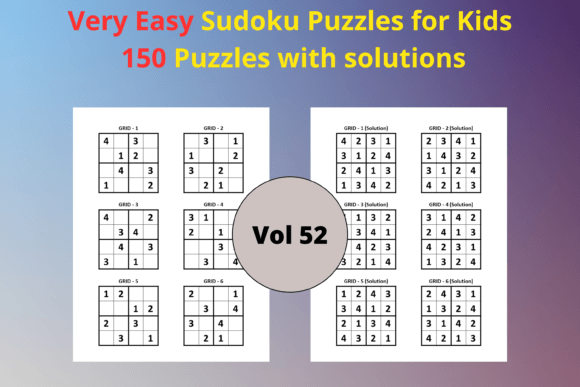
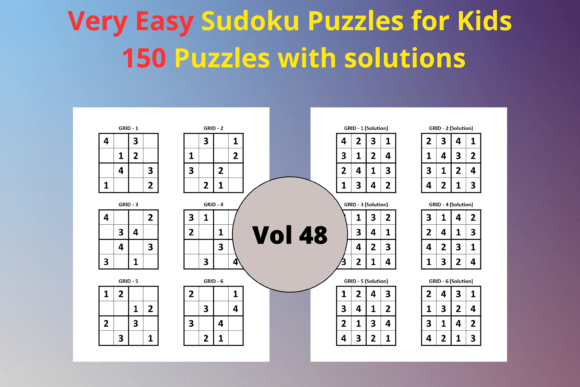
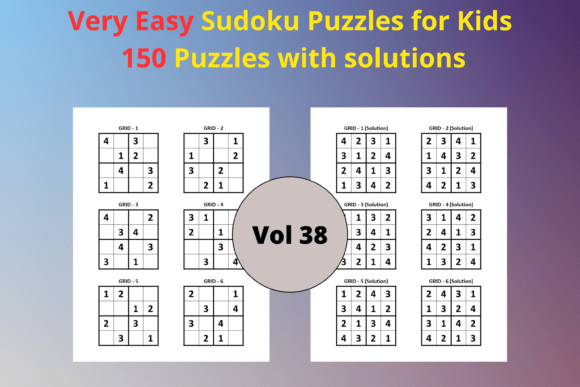
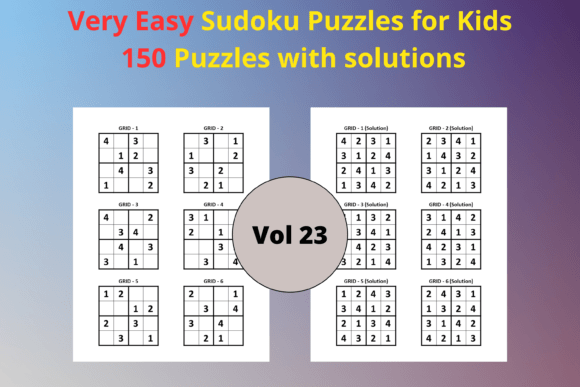
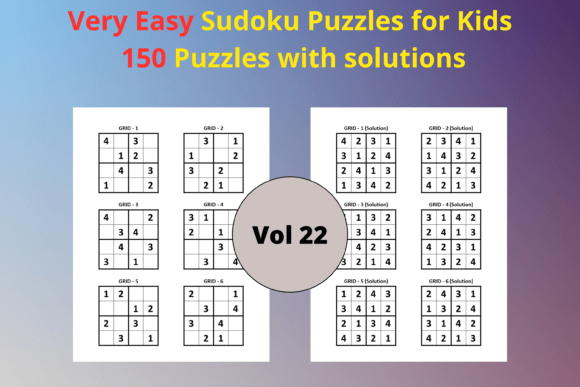
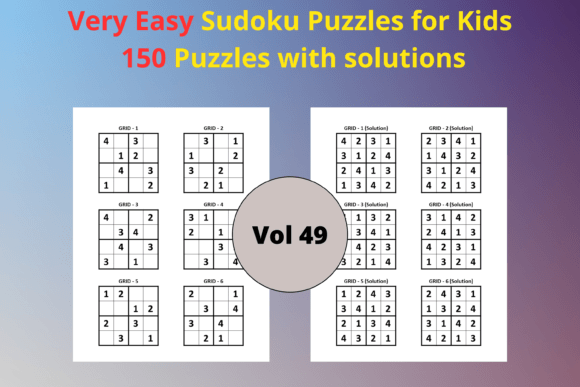
The product name itself describes the core offering. It is a collection of 150 distinct 4x4 Sudoku puzzles, paired with their solutions, branded as edition "49". The 4x4 grid is the foundational element here, significantly simpler than the standard 9x9 puzzle, making it appropriate for very young beginners or children needing a confidence-building introduction to logic games. The designation "Very Easy" suggests a carefully calibrated difficulty level where the puzzles are solvable without frustrating complexity.
What makes Very Easy Sudoku for Kids 49 distinct is its format and packaging. It is not a physical book or a standalone app. It is offered as digital KDP (Kindle Direct Publishing) interiors, meaning the files are formatted specifically for uploading to platforms like Amazon KDP to create print-on-demand paperback books. Additionally, it includes editable PPTX files and print-ready PDFs, emphasizing utility for those who wish to use the puzzles directly—perhaps for classroom handouts, afternoon activity sheets, or personal use—without going through a publishing platform.
Format and Flexibility: Digital Files Versus Other Options
The primary comparison point for Very Easy Sudoku for Kids 49 lies in its digital, multi-file format. This contrasts with several common alternatives in the children's puzzle space.
Purchasing a ready-made physical Sudoku book from a retailer offers immediate gratification and no preparation work. However, you are locked into that book's specific puzzle count, layout, and difficulty progression. With a digital pack like this one, you gain control. The editable PowerPoint files allow you to adjust layouts, change fonts, or even extract individual puzzles to create custom worksheets. The PDFs provide a consistent, ready-to-print format if you prefer no modifications.
Similarly, numerous free websites and apps generate Sudoku puzzles. These offer endless variety and interactive solving, which can be engaging. Their tradeoff often involves variable quality, inconsistent difficulty levels suitable for kids, and the need for screen time. Very Easy Sudoku for Kids 49 provides a curated, guaranteed-easy set of 150 puzzles that you can offer offline, in a tactile format, which many educators and parents prefer for focused activity time. You are also assured of the puzzles' consistency, as they are part of a fixed collection.
The Tradeoff of Curated Content Versus Unlimited Generation
A key decision factor is between curated, fixed content and dynamically generated content. A pack of 150 puzzles is a finite resource. Once a child solves all 150, the specific content from Very Easy Sudoku for Kids 49 is exhausted. This is its inherent limitation. For a child progressing rapidly, or for a classroom needing daily puzzles over a long term, this might not be a perpetual solution.
The benefit, however, is quality assurance and structure. Each puzzle in this pack is presumably tested to meet the "Very Easy" standard for a 4x4 grid. There's no risk of an algorithm unexpectedly producing a puzzle that is deceptively tricky for a young mind. For building initial skills and confidence, a reliable, difficulty-controlled set can be more valuable than an infinite but unpredictable supply. It acts as a complete foundational course. Furthermore, having the solutions immediately available for all puzzles provides a straightforward reference for checking work or offering help, which free generators may not always include.
Evaluating the Practical Use Cases
When might this product be the right choice? Its design suggests several best-fit situations. If you are an educator creating supplemental materials for early math or logic lessons, the editable PPTX files are a significant advantage. You can integrate puzzles into your existing presentation formats or combine them with other learning materials.
For parents seeking structured, screen-free activities for travel, weekends, or quiet time, the print-ready PDFs offer simple, high-quality pages that can be printed in bulk or as needed. The 8.5 x 11 inch size is standard for home printers and easy for children to handle.
For individuals exploring self-publishing on platforms like Amazon KDP, this product serves as a ready-made interior. You can upload it directly to create a physical book without designing the puzzle pages yourself, a considerable time savings if the difficulty level and puzzle count match your target audience.
When to Consider Alternatives
Very Easy Sudoku for Kids 49 may not be the optimal resource in other scenarios. If your child has already mastered 4x4 Sudoku and is ready for 6x6 or 9x9 grids, this pack's specific format is no longer appropriate. You would need to seek out resources offering progressive difficulty levels or larger grids.
Similarly, if your primary goal is interactive, gamified learning with immediate feedback and adaptive difficulty, a well-designed educational app might serve that purpose better, despite the tradeoff of requiring a device. The digital pack here is static; it does not track progress, celebrate achievements, or increase difficulty dynamically.
Finally, if you require only a handful of puzzles for a single event or short-term use, the value of a 150-puzzle collection might be disproportionate compared to finding a few free puzzles online or in a general puzzle book. The investment in a large digital pack is justified by ongoing, repeated use.
The Importance of Difficulty Calibration
A crucial aspect often overlooked when evaluating children's puzzles is the precise calibration of "easy." Very Easy Sudoku for Kids 49 stakes its utility on this claim. In comparison, many free resources or all-ages Sudoku books label puzzles as "easy," but those are often easy relative to adult standards and can still be challenging for a 5 or 6-year-old. The 4x4 grid is the first filter. The internal logic of the puzzles within this pack is the second. For a child's first exposure, a truly "very easy" experience—where they can succeed and enjoy the process—is vital for cultivating interest. Products that specialize at this entry level, like this one, fill a niche that broader resources sometimes miss.
Making an Informed Decision
Choosing the right puzzle resource depends on balancing your specific needs: the child's skill level, the desired format (digital, physical, interactive), the context of use (home, school, publishing), and the need for control over the content. Very Easy Sudoku for Kids 49 excels as a specialized, format-flexible, and quality-controlled collection for the earliest stage of Sudoku learning. Its value is pronounced for those who want reproducible, offline materials in a standard size, or who seek a complete, upload-ready product for self-publishing.
By contrast, if your needs lean towards endless variety, progressive difficulty, or fully digital interaction, other alternatives in the market will likely be a better fit. Assessing the long-term use case—whether 150 puzzles are sufficient and whether the "very easy" level is the right starting point—will guide you toward the most helpful resource. Ultimately, products like Very Easy Sudoku for Kids 49 serve a clear and practical purpose within a wider ecosystem of educational tools, providing a straightforward, reliable foundation for a child's first steps into logical thinking.