Editable Gratitude Journal for Women KDP: A Comprehensive Guide for Creators and Users
The practice of gratitude has evolved from a simple mindset exercise to a structured wellness activity, supported by tools designed to facilitate daily reflection. Among these tools, customizable journals have become particularly significant. The availability of an Editable Gratitude Journal for Women KDP represents a unique intersection of personal development and digital creation, offering both a product for end-users and a versatile asset for entrepreneurs.
Understanding the Core Product Components
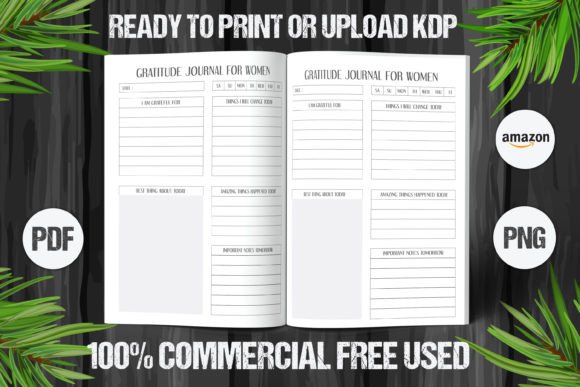
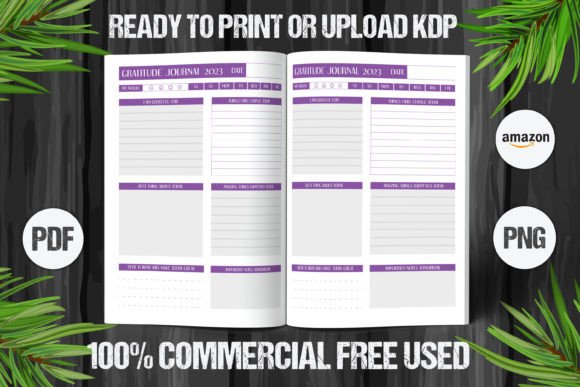
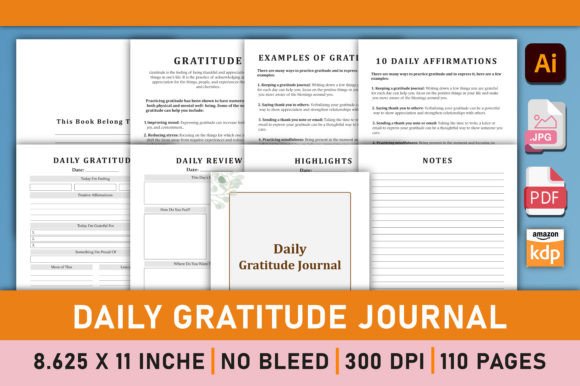
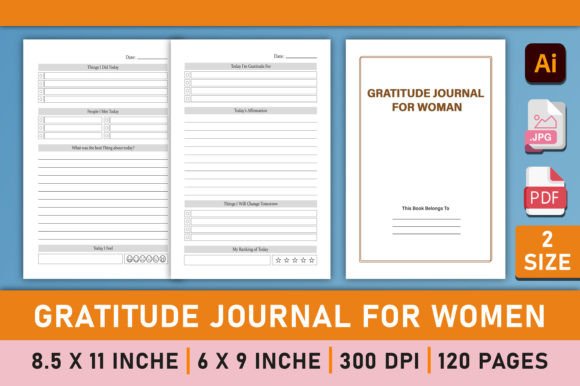
A typical Editable Gratitude Journal for Women KDP package is not a single static item but a collection of digital resources. These resources are engineered to serve two primary functions: immediate commercial use and flexible adaptation. The core offering usually includes editable source files, which allow for modifications in design, text, and layout. This is complemented by high-quality, print-ready PDF files formatted for standard trim sizes like 8.5x11 inches and 6x9 inches. The inclusion of single PDF and JPG files provides multiple format options for different publishing or personal printing needs.
The design itself is tailored, often starting with a "Belongs to page" and structured over 120 pages with two different interior templates. Technical specifications such as CMYK color mode and 300 DPI resolution are critical for professional-grade printing results. A design without bleed is common, simplifying the printing process for those using home printers or certain print-on-demand services. This combination of editable flexibility and print-ready precision forms the foundation of the product.
Primary Advantages for Self-Publishing Entrepreneurs
For individuals exploring the Amazon KDP platform or other self-publishing avenues, an editable journal interior transforms the development process. The most significant advantage is the drastic reduction in time and technical skill required to produce a market-ready product. Instead of designing 120 pages from scratch, a creator can focus on branding, minor customizations, and marketing strategy. The editable source file empowers changes to fonts, color schemes, or prompt wording, allowing for differentiation in a crowded marketplace.
The provision of files in both 8.5x11 and 6x9 inches addresses a key consideration in physical book creation, as these are among the most popular and cost-effective trim sizes on platforms like Amazon KDP. Having professionally prepared files in both sizes eliminates layout recalculation work. Furthermore, the 300 DPI CMYK files ensure that the final printed journal maintains visual quality, with crisp text and vibrant colors, which is a direct factor in customer satisfaction and perceived product value.
Practical Applications for End-Users and Professionals
Beyond the creator, the end-product—the physical gratitude journal—serves a growing demographic. Women seeking a structured method to cultivate gratitude use these journals as a daily anchor. The design is often geared towards fostering a sense of ownership and personal space, starting with the "Belongs to page." The two different templates within the 120 pages can offer variety, perhaps alternating between free-form reflection pages and more guided prompts, which helps maintain user engagement over several months.
Educators, therapists, and wellness coaches may also find value in such journals. They can serve as recommended tools in coaching programs or as adjunct materials in workshops focused on mental well-being. The professional appearance of a print-ready journal lends credibility, making it suitable for such integrative uses. For the hobbyist, the availability of JPG files or single PDFs might allow for personal printing and binding, creating a customized gift or personal project without engaging in commercial publishing.
Key Considerations in Selection and Use
When evaluating an Editable Gratitude Journal for Women KDP product, several factors merit attention. The term "editable" requires clarification on which software is needed; typically, source files are compatible with common design programs. The claim of "no bleed" is practical for many, but those seeking a more premium printed look with full-color backgrounds might need to adjust the files accordingly. The 120-page count is substantial, but users should consider whether the included templates truly match the intended audience's reflection style.
For the creator, understanding the licensing and usage terms is paramount. These products are generally intended for commercial use, allowing you to upload and sell the finished journal on Amazon KDP. However, maintaining the uniqueness of your final product is crucial. The editable nature invites you to inject your own brand identity—changing the cover, adding a unique introductory page, or modifying the prompts to align with a specific niche, such as gratitude for entrepreneurs, mothers, or artists.
Workflow Integration from Edit to Publication
The journey from purchasing an editable interior to having a live product on Amazon KDP follows a logical workflow. First, the editable source file is accessed and modified. This stage might involve simple text changes or more complex layout adjustments using graphic design software. Next, the high-quality PDFs are reviewed. Since they are already optimized for 8.5x11 and 6x9 inches at 300 DPI, they often require no further technical preparation.
The subsequent step involves uploading these PDF files to the KDP platform. Here, the no-bleed feature simplifies the setup process as the interior file margins are clearly defined. The creator then combines the journal interior with a professionally designed cover file—often created separately—to complete the book project. The entire process leverages the ready-made components to bypass the most technically demanding phases of book interior design, focusing energy instead on marketing, description writing, and keyword selection for the Amazon listing.
Observed Trends in the Gratitude Journal Marketplace
The market for guided journals, particularly gratitude journals for women, shows distinct trends. There is an increasing demand for products that feel personal and niche-specific rather than generic. This is where the editable aspect becomes a strategic asset. Creators can observe trending themes in wellness—such as gratitude combined with mindfulness exercises, goal-setting, or even seasonal prompts—and adapt the base template to reflect these themes. The ability to quickly produce a journal for a specific season (e.g., a "Fall Gratitude Journal") or event capitalizes on timely market opportunities.
Another trend is the emphasis on aesthetic quality. Consumers expect journals to be visually appealing, which makes the provided 300 DPI CMYK designs vital. The inclusion of two different templates within one journal also responds to the user desire for variety, preventing monotony in the daily practice. From a commercial perspective, following the creator's profile for new updates, as often mentioned in these product descriptions, allows entrepreneurs to stay abreast of evolving design trends and new template releases, building a potential portfolio of related journal products.
In essence, an Editable Gratitude Journal for Women KDP interior is more than a digital product; it is a catalyst. For the aspiring KDP publisher, it reduces barriers to entry and provides a foundation for a professional book. For the end-user, it results in a tangible tool that supports a meaningful personal practice. The technical specifications—the trim sizes, DPI, color mode, and page count—are not arbitrary details but deliberate choices that ensure functional reliability across both the creation and consumption experiences. This dual-purpose nature highlights its real-world relevance in today's intersecting domains of self-publishing, wellness, and digital commerce.