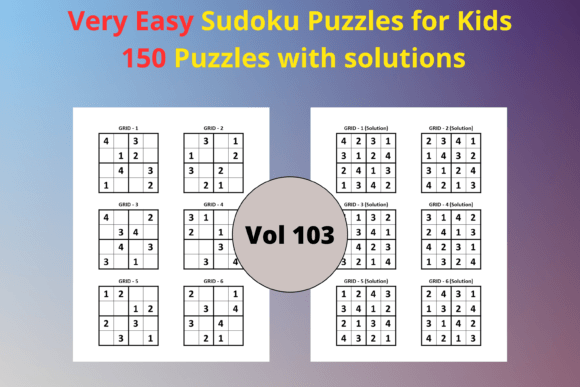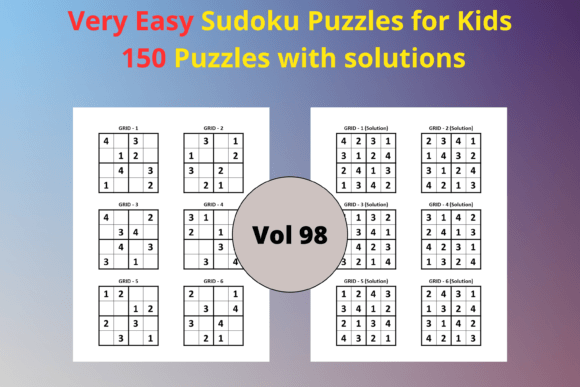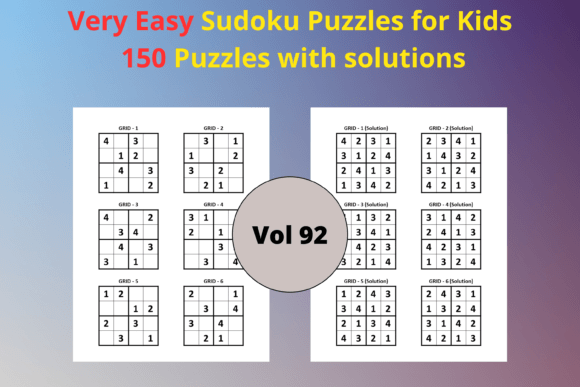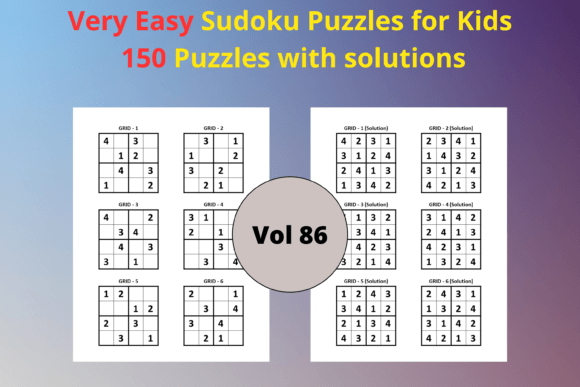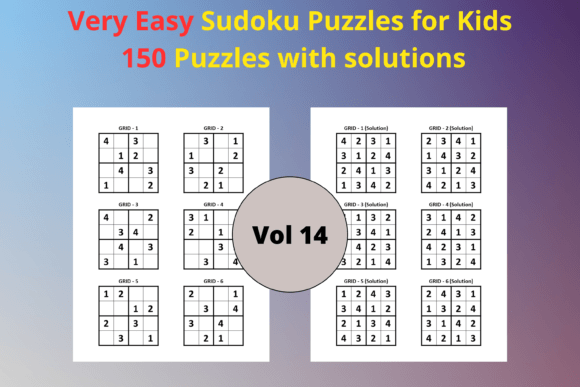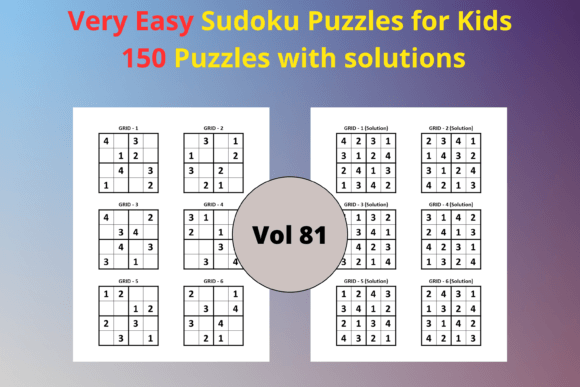
A Comprehensive Guide to 81 Very Easy Sudoku Puzzles and 150 Activity Pages for Young Minds
Foundational Math Skills Through Structured Play
Introducing children to structured logic games at an early age can have a significant impact on their cognitive development. Very easy Sudoku puzzles, particularly in the 4x4 format, serve as an ideal entry point. This specific activity pack, containing 81 puzzles alongside a larger collection of 150, provides a graduated path from initial understanding to confident repetition. The core value lies not in complexity, but in the reinforcement of basic pattern recognition, number placement, and rule-following. Educators and parents observe that these puzzles help solidify understanding of rows, columns, and the fundamental concept of unique values within a defined grid, which are precursors to more advanced mathematical thinking.
Key Characteristics of 4x4 Very Easy Sudoku for Kids
The design of these puzzles is deliberate. A 4x4 grid reduces the cognitive load compared to traditional 9x9 puzzles, allowing a child to focus on the logic process without being overwhelmed by options. The "very easy" classification means the puzzles are seeded with a higher number of pre-filled cells, guiding the solver toward the solution with minimal frustration. Each puzzle in a collection like Very Easy Sudoku for Kids 81 is typically calibrated to ensure a successful experience, building a positive association with problem-solving. The repetitive nature across 81 or 150 different puzzles allows for skill automation, where the initial conscious effort gradually transforms into intuitive understanding.
Practical Applications in Educational and Home Settings
Beyond being a simple pastime, these curated puzzle packs serve multiple practical roles. In classroom environments, they are used as warm-up activities, quiet time exercises, or supplemental material for math centers. The inclusion of separate solution sheets empowers self-correction and independent learning. For home use, they offer structured screen-free engagement, often used during travel or as part of a daily routine. The editable PPTX file included in professional packs allows educators, homeschoolers, and activity book creators to customize pages, perhaps adding instructions in a different language or integrating the puzzles into a larger themed workbook. The ready-to-upload PDF format speaks directly to KDP (Kindle Direct Publishing) interior creators who require a polished, standardized product that meets platform specifications for trim size and layout.
Advantages for Content Creators and Publishers
For professionals creating materials for the children's activity market, a pack comprising 150 very easy Sudoku puzzles with solutions represents a substantial ready-made resource. The 8.5 x 11-inch size is the standard for many printable books and digital publications in North America, ensuring compatibility. Having both a PDF and an editable PPTX file addresses different workflow needs: the PDF for immediate upload and sale, the PPTX for adaptation, branding, or creation of derivative products. This duality increases the utility of the product, making it relevant for a business owner selling digital downloads on Etsy, a teacher preparing class materials, or a researcher studying the efficacy of puzzle-based learning tools. The sheer volume—150 different puzzles—ensures that a child or a class will not run through the material quickly, providing long-term value.
User Considerations and Optimal Implementation
While the puzzles are designed to be very easy, successful implementation considers the user's age and prior exposure. Typically, these are targeted at children in early elementary grades. The facilitator's role is to explain the simple rules clearly, perhaps using the first few puzzles as guided examples. Observations suggest that presenting the puzzles in a consistent, visually clean format—as these professional KDP interiors are—helps maintain focus. A key consideration is the balance between challenge and achievability; the "very easy" level is specifically chosen to prevent discouragement. The inclusion of solutions is not for cheating, but for building metacognitive skills: a child can check their work, identify a mistake, and trace back their logical steps to understand the error. This process is fundamental to developing a growth mindset in learning.
Workflow Integration for Various Professionals
The utility of such a puzzle pack extends into various professional workflows. An educator might use the PPTX file to insert puzzles into a weekly homework packet. A creator specializing in KDP interiors might use the PDF as a core component of a larger activity book, combining it with other puzzle types. The fact that the files are described as "edibles and ready to upload" indicates they are formatted with proper margins, consistent styling, and clear page sequencing—critical technical details that save hours of layout work. For hobbyists running after-school clubs or parents organizing community events, these puzzles can be printed in bulk as an readily available activity. The scalability from a set of 81 puzzles to a collection of 150 offers flexibility for different project scopes and durations.
Observations on Cognitive Development and Engagement
Engaging with very easy Sudoku puzzles repeatedly, as afforded by a large collection, leads to observable outcomes. Children begin to recognize common patterns and strategies, such as scanning rows and columns for missing numbers. This reinforces visual scanning and systematic thinking. The non-verbal, logical nature of the puzzle makes it accessible to a wide range of learners, sometimes serving as a calming, focusing activity. In a broader context, mastering these foundational puzzles can build confidence to approach more complex versions later. The design of these packs, with solutions provided separately, also encourages a sense of responsibility and independent verification, moving beyond simple answer-seeking to process validation.
The Role of Volume and Variation in Skill Building
Why include 150 different puzzles when the core concept can be taught with a dozen? Variation and volume are crucial for deep learning. Each puzzle, while adhering to the same rules and difficulty level, presents a unique arrangement of pre-filled numbers. This ensures the child is applying logic anew each time, not merely memorizing a specific solution path. The repetition across 150 instances solidifies the underlying principles more thoroughly than sporadic practice. For a KDP interior product, this volume also translates to commercial value—a book with 150 pages of puzzles and solutions offers substantial content, making it a more attractive purchase for end consumers compared to thinner volumes.
The creation and use of specialized activity materials like very easy Sudoku packs highlight a convergence of educational theory, practical design, and digital publishing logistics. Whether the focus is on a child's first encounter with logical deduction, a teacher's need for reliable resources, or a creator's efficient production of market-ready content, these thoughtfully assembled packs meet a clear and widespread need. The emphasis on ease, clarity, and professional formatting ensures that the primary goal—engaging young minds in productive play—is achieved without unnecessary friction for all parties involved.